alumni news
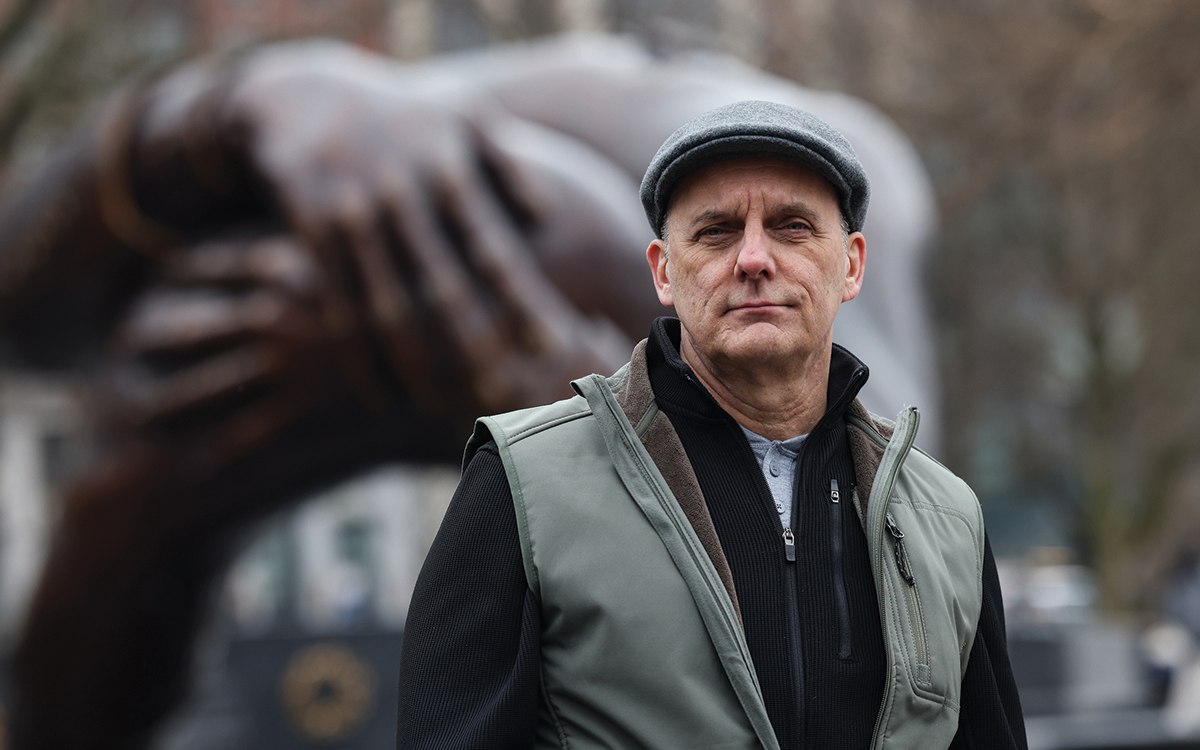
Joseph “Jay” Bourgeois, MHA ’08, has made a career of serving on the front lines of global healthcare, melding his professional skills as an administrative leader and physical therapist with a strong personal code of humanitarian compassion—forged from years of service in some of the world’s most troubled areas, from war zones in Ukraine to refugee camps in Bangladesh.
His most recent posting in Ukraine—training local healthcare professionals to treat war-wounded civilians—ended late last year, giving him time to reflect on the path that led him to his most challenging and rewarding assignments. “I’ve always been curious and adventurous,” Bourgeois says. “When the opportunity arose to serve in environments where the need was greatest, I couldn’t say no.”
After more than 20 years working in medical settings in the US, an international opportunity arrived in 2010 when he was offered the chance to support the rehabilitation work of Partners in Health, and its legendary late founder Dr. Paul Farmer, in Haiti. “I said, ‘Wow, absolutely.’ My first trip to Haiti was such an eye-opening experience, and that’s when [this chapter of my career] really started.”
FROM LOCAL TO GLOBAL
Bourgeois began his career as a physical therapist, graduating from the University of Connecticut in 1990. Throughout his 20s and 30s, he ran operations in clinical programs in home healthcare, rehabilitation, and inpatient acute care at institutions around New England.
He loved the patient-centered work, but by his late 30s, the profession’s physical demands and relentless hours had begun to wear him down. He decided to pursue a broader path and enrolled in the Sawyer Business School’s master of healthcare administration program.
His time at Suffolk equipped him with the tools to transition into leadership roles. “I learned about health policy, ethics, operations, and law—concepts that I’ve carried into every project I’ve worked on, whether in Boston or a conflict zone.”
BUILDING TRUST
Over the past 17 years, Bourgeois has overseen medical relief projects for nonprofit groups in Mongolia, Cameroon, Bangladesh, Peru, Barbados, China, Ethiopia, and Vietnam. He works directly with healthcare teams caring for patients, helping them solve the leadership challenges of organizing resources, assessing needs, and gaining the trust of local clinicians.
In a place like Ukraine, he says, it’s crucial not to arrive with predetermined solutions but to take an almost anthropological approach—observing, listening, creating trust before introducing change.
"You can’t parachute in,” he explains. “It may take me two weeks to develop a trusting relationship before I can really dive into training.”
Boiled down, he says, the work—wherever in the world it may be—focuses on restoring dignity and function to individuals in crisis.
“Whether it’s a bomb victim in Ukraine or a migrant with chronic pain from walking hundreds of miles to reach the US-Mexico border, my role would be to listen, support, and provide solutions that meet their unique needs,” he says. “The injuries of migration are different from those of war, but the need for care, compassion, and resources is just as critical.”
Working in conflict zones also demands emotional resilience and the ability to adapt. Bourgeois’ background in physical therapy has helped him maintain his own physical and mental health under stressful conditions.
“I’ve learned to find peace even in chaos,” he shares. “Whether it’s listening to birds or just watching clouds, these small moments help me stay grounded and ready to face the day.”
His personal life also shapes his work. As an openly gay man, he has navigated environments where cultural and social norms differ significantly from the US. “I bring my whole self to every mission,” he says. “My focus is always on the task at hand: delivering healthcare and building trust.”
Return to Table of Contents
spring 2025
Photograph by Michael J. Clarke
By Erica Noonan