In the ordinary course of things, we do not withhold medical care from people who don’t take appropriate precautions or who engage in risky behavior. We don’t deny medical treatment to smokers, though we charge them more for health insurance. We don’t deny medical treatment to people who commit crimes—like the Boston Marathon bomber, who received state-of-the-art medical care—or to people who are injured when they engage in extreme sports like rock climbing.
So I think we can’t be single-minded and say that if you didn’t get a vaccine, you are on your own for healthcare. But there are some things we can do. One is taking into account the fact that vaccine status might predict the likelihood of successful treatment. When physicians and hospitals are trying to decide how to allocate scarce resources, that could be a factor because the person who hasn’t been vaccinated may not fare as well.
For example, many institutions require candidates for organ transplantation to be fully up to date on their vaccines. Human organs are the definition of the scarcest medical resource. It doesn’t make a lot of sense to use that incredibly scarce resource in people who will not take even minor steps, such as having a vaccine, to improve the success of the procedure.
There has been a lot of talk about personal freedom and the freedom not to have the vaccine, but that freedom must be balanced against the freedom of everyone else not to be exposed to risk because other people won’t take precautions. Freedoms are not a one-way street.
A common criticism of government involvement in health care is that it leads to rationing, but we have rationing now, and it’s by your ability to pay. So we live with this fiction that we are not rationing healthcare when we really are.
It's first-come, first-served when you get to a hospital, but when you do have to make hard choices, I think that to the extent that vaccine status would factor into any standard medical calculation, it’s right to take it into account.
In some states with low vaccination rates, the influx of COVID patients has resulted in demand for beds for intensive care that exceeds the available supply. In some cases, vaccinated patients have faced expensive and risky transfers out of state, while unvaccinated patients have received care. What legal lessons can we draw from this situation?
HEALTH
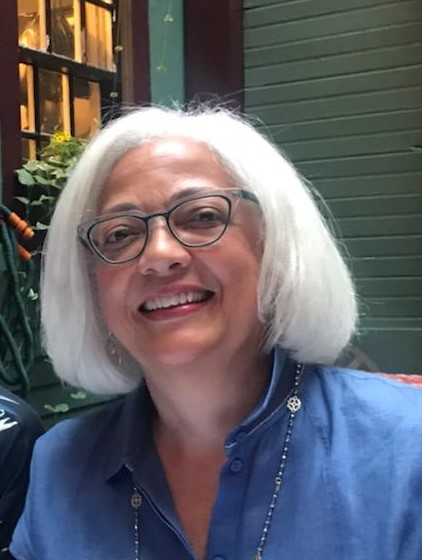
Renée M. Landers is a professor of law and the faculty director of the Health and Biomedical Law Concentration and the Master of Science in Law: Life Sciences program. In 2018, she served as a Distinguished Visiting Fellow at the National Academy of Social Insurance.
Interview by June Bell
Suffolk Law Professor Renée M. Landers

Return to Features
Return to Table of Contents
Images from top: Getty Images, Michael J. Clarke
Early on in the pandemic, we faced a situation where it became clear that shelter settings did not have the capacity needed to allow individuals who had tested positive for COVID-19 to isolate or quarantine. Therefore, there were situations where a person who had tested positive was not sick enough to be admitted into a hospital, but also did not have a home to quarantine or isolate in. That was a stressful situation because our mission is to provide care to the most vulnerable populations, which was increasingly difficult to do in the face of this disease.
It took about a week for the city to procure alternate housing that would accommodate isolation and quarantine. Ultimately, the city really came together, and we were able to contract with several entities, such as the Boston Convention Center, and various universities, including Suffolk, that provided unused spaces.
One of the biggest challenges we faced involved situations where a person who had tested positive for COVID-19 and was Photographs from left: Michael J. Clarke, Ketan Gajria, Getty Images experiencing homelessness was struggling with substance abuse or mental health issues and would not agree to isolate or quarantine themselves from others. So, here you have a person whose medical condition is a threat to the community, and they need help to recover. But their health challenges are preventing them from seeking the care they need to protect themselves and others.
I collaborated with [now-retired] Superior Court Chief Justice Judith Fabricant and Boston Police Department counsel to determine the legal procedure and framework for involuntarily committing an individual who had tested positive into isolation or quarantine. The questions we asked were: What behavior creates a public health threat such that a person who has tested positive could be involuntarily isolated or quarantined? How do we make sure that the individual’s rights are adequately represented, that those rights are not infringed upon in a way that would be unconstitutional? And how does this person who is sick get the care that they need? These questions were challenging, and there were no recent precedents we could turn to for guidance. Ultimately, and luckily, we only used this policy in a handful of cases.
We all understood how extreme it was for the government to step in in this way, and we ultimately decided that involuntary quarantine or isolation would require two elements: the individual’s refusal to quarantine or isolate voluntarily, and active threats by the individual to spread the disease.
While I was working on these policies, the biggest thing I learned was how incredibly lucky I was to have a home that I could work from. During the pandemic, many of us started to get tired of being stuck at home, working in our bedrooms, but I realized how blessed I was to have a bedroom to be stuck in, and that I had no significant mental health issues to contend with.
About 84% of our BPHC workforce are essential workers. In spite of the pandemic, they all had to work in-person, staffing shelters, running ambulances, working in recovery services, and providing care at the homes we run. They really are health care heroes. We should celebrate them and recognize their work and dedication.
The pandemic took already complex issues like homelessness and made them even more challenging. As someone at the center of Boston’s coronavirus response, what have you learned from the experience?
Batool Raza JD’14 is the interim general counsel at the Boston Public Health Commission (BPHC), the city’s 1,200-employee public health agency. The commission has six bureaus: Child, Adolescent & Family Health; Community Health Initiatives; Homeless Services; Infectious Disease; Recovery Services; and Emergency Medical Services.
Batool Raza JD’14