Harbour life | neighbourhoods | day trips | summer events
Copenhagen
B eing on vacation is an automatic mood-lifter. So just imagine the joy you’ll feel visiting a place where everyone is already cheerful. The World Happiness Report this year ranked Denmark as the second happiest country in the world, for the sixth consecutive year. Its capital, Copenhagen, is a microcosm of reasons why the Danes have it so good, especially in the summer as locals fill the streets, harbours and parks..
With its commitment to green living—cycling everywhere is just the start—as well as sustainable food and drink, Copenhagen prides itself on being one with the land. Through its world-class culture, the city offers a plethora of community events. Take advantage of the Copenhagen Card, which offers free transport throughout the city’s diverse neighbourhoods and access to 80+ attractions; you’ll also see plenty of eye-catching architecture along the way.
And there's good news for Canadians: It just got even easier to arrive at this Danish destination. WestJet will operate a direct flight from Halifax to Copenhagen up to four times per week from May 28-Sept. 28.


should be in your summer plans
in collaboration with:


BACK TO
THE TOP

BACK TO
THE TOP

BACK TO
THE TOP


Nordhavn | credit: Lukas Bukoven

Christianshavn neighbourhood


Harbour life
Neighbourhoods
Day trips
Refshaleøen | credit: Giuseppe Liverino
The Marble Church
Tivoli Gardens

Plan your trip


Nordhavn | credit: Lukas Bukoven
Bike and pedestrian bridge | credit: Daniel Rasmussen
Kronborg Castle | credit: Lukas Bukoven
Breakfast at Mirabelle | credit: Lukas Bukoven
Lille Bakery (left); Øens Have (right) | credit: Daniel Rasmussen (left); Lukas Bukoven (right)
Hermitage Hunting Lodge | credit: Lukas Bukoven
Dragør | credit: Daniel Rasmussen
SEE OUR OFFERS

Despite its location near Copenhagen Airport, Dragør still manages to retain its historical charm. Founded in the 1100s as a fishing village, the town features cobblestone streets and yellow-painted houses with red-tiled roofs. Fishing boats bob up and down in the harbour. For a freshly caught lunch, visit Dragør Smokehouse. If you prefer a quick snack of coffee and pastries on the beach, head over to Gabriel Jensens Traktørsted. Explore the area’s history at Dragør Museum or The Dutch Farms (in the 1500s, the King of Denmark invited Dutch farmers to grow vegetables for the royal family and teach advanced agriculture practices). Alternatively, check out the harbour area, where the town's rich maritime history is still very much present. Enjoy the views across the Øresund Strait toward Sweden or head out on the water with a rented boat from WeSail.
You can easily see more of Copenhagen than its city centre with a few day trips. Catch a 20-minute train to Klampenborg Station to The Deer Park, or Dyrehaven. A UNESCO World Heritage Site, the Deer Park has been left practically untouched for hundreds of years. The old hunting grounds of the royals, the park is full of small lakes, open landscapes and more than 2,000 free-range deer roaming around. Visitors come here to picnic, jog, ride bikes and even ride horses (or take a horse and carriage). The King's hunting lodge, The Hermitage, is still in the heart of the park, and only offers guided tours in the summer.
�
An impressive structure dating back to 1650 and named after a forest ranger, Peter Lieps Hus (house) is now a restaurant within the park. It serves classic Danish inn dishes for lunch and dinner using local ingredients. Just across from the restaurant is Dyrehavsbakken, founded in 1583 and the world’s oldest amusement park, which offers 33 rides for all ages. Expect colourful wooden structures, quirky stalls and no neon signs.
A short bike ride from Nørrebro is Frederiksberg, a leafy neighbourhood known for its green spaces. In summertime, you'll see locals walking, running or having a picnic in Frederiksberg Garden. It’s also a free spot from which you can see the elephants at the Copenhagen Zoo; they tend to be in their outdoor area during the warmer months. Located right next door to the park are the Cisterns; these former underground water reservoirs have new life as a contemporary art space with changing exhibitions. Do note that it’s cold here even on sunny days, so bring a sweater. Should you need one, you're in luck. Shoppers flock to streets like Gammel Kongevej and Værnedamsvej, both filled with shops and cozy cafés.
Copenhagen’s year-round cycling culture is famous the world over, and the locals welcome visitors to join in. You can rent a bike from your hotel or from services like Donkey Republic. The good weather makes it a tempting option even if you haven’t hopped on a bike in decades. If you’re a nervous rider, use your Copenhagen Card or buy tickets for the public transport system, which is easilly navigable. Or, just wander around the walkable city centre, which has no hills.
Full of history, the city centre’s attractions include iconic landmarks. The Danish royal family lives in Amalienborg Palace, where the Royal Guard changes every two hours. The Marble Church stands right next door with the largest church dome in northern Europe. To see royal treasures on display, head to Rosenborg Castle, where you'll find the crown jewels, including ones that are also worn by Denmark's reigning queen. Refuel with a stop at Restaurant Møntergade for what many locals consider some of the finest smørrebrød, or Danish open-faced sandwiches; these are traditionally enjoyed with a beer or schnapps (the Danes call it "snaps").
The idea of jumping in your local harbour might give you pause, but here in Copenhagen, rest assured, it’s safe. The city spent hundreds of millions of euros improving the water quality to make the harbour environment so clean that anyone can dive right in. With summer temperatures ranging up to 25 degrees Celsius in summer, you’ll no doubt see the locals swimming in the harbour. It’s the perfect way to (literally) dip your toes into the Danish way of life.
The many public (and free) harbour baths are a great way to check out different neighborhoods as well. A harbour bath is essentially a free-floating swimming pool in a harbour, staffed by lifeguards in the summer. Swim in the centre of the city at Islands Brygge Harbour Bath, or in Nordhavn at the newer Sandkaj bathing zone. La Banchina at Refshaleøen includes a harbourfront café and restaurant selling homemade baked goods and coffee. If you prefer somewhere away from the crowds, go to Kastrup Sea Bath, where you can also enjoy a view of Sweden.
Just a few stops further north along the coastal train line you'll reach Helsingør (Elsinore). Here, you can visit Kronborg Castle, a UNESCO World Heritage Site dating back to 1420 and the setting for “Hamlet.” In fact, a Shakespeare Festival takes place each August in an open-air theatre just across the moat, with the castle as the backdrop. The town itself is one of Denmark’s best-preserved historic towns and is full of cobblestoned streets and half-timbered houses. For more history, head to the M/S Maritime Museum. Built into an old dry dock, the museum highlights Denmark’s position surrounded by three seas. Using award-winning architecture and sensory exhibits, the museum explains Danish trade and shipping from the 15th century to present day. During your visit, stop for a bite to eat at Patio, in the centre of town, for coffee and Scandinavian baked goods.
Copenhagen is crisscrossed by canals and has bridges for bikes and pedestrians only. Bike over to Refshaleøen, home to Reffen Street Food Market, which has 30 food stalls and bars (as well as 2,500 seats). The neighbourhood is packed with places to explore. Lille Bakery offers a bun with cheese, a traditional Danish breakfast. Øens Have is an urban farm full of plants and wildlife; the restaurant in the centre of the garden offers a true farm-to-table experience. Copenhagen Contemporary shows installation art from renowned artists and emerging talent.
Be prepared if crossing Dronning Louises Bridge to Nørrebro—it's one of the most heavily trafficked cycling stretches in Denmark, with more than 40,000 cyclists daily. It's worth the badge of honor. Jægersborggade, a residential street, went from dodgy to hip and is now home to around 40 art galleries, jewelry designers and vintage clothes shops. Enjoy a glass of wine at Pompette, a small wine bar off Nørrebrogade, then go next door for a chicken burger at Poulette. If you're craving something sweet, grab ice cream at Isoteket by the lakes and enjoy the people-watching.
If boating is more your speed, you could meet fellow travellers or locals on a canal tour with Hey Captain. Focused on conversation rather than a fixed script, the captain will share stories about the city as you glide past it for two hours. GoBoat lets you steer your own vessel for a bit while you pass iconic landmarks like the Opera House, the Royal Castle and the Royal Library (also known as the Black Diamond thanks to its black granite cladding). GoBoat fits eight passengers and has environmentally-friendly boats with electric engines recharged by solar panels and you don’t need a boating license to use it. Pro tip: if you book more than one hour or at selected morning times, you get a discount.
credit: Daniel Rasmussen
Helsingør | credit: Lukas Bukoven
Nørrebro | credit: Daniel Rasmussen

Summer events
Sankt Hans Aften
The city will celebrate more than music this summer. Denmark’s annual design festival “3daysofdesign” is considered one of the most significant in Scandinavia and Northern Europe. Open to the general public and free to attend, this year’s annual event will be held June 10-12 and features showrooms, exhibits and workshops.
While the official program for Copenhagen Pride Week (Aug. 8-16) won’t be published until July 20, the event will transform Copenhagen’s City Hall Square into Pride Square. No ticket is required to attend events like Drag Night or the Big Queer Flea Market. The Copenhagen Pride Parade takes place Aug. 15, starting at Frederiksberg City Hall and ending at Copenhagen City Hall.
It’s no secret that Copenhagen has become a culinary superstar on the world stage, so about 80,000 people visit the annual Copenhagen Cooking & Food Festival (Aug. 21-30). This year, the apple is celebrated as the “star of the year,” and you’ll see the city’s restaurants and eateries incorporating the fruit into a variety of menu items. Indulging in Danish cuisine is not a bad way to work your way around the city.
Summertime and a packed events calendar go hand in hand, especially in Copenhagen, where visitors and locals are invited to partake in the fun.
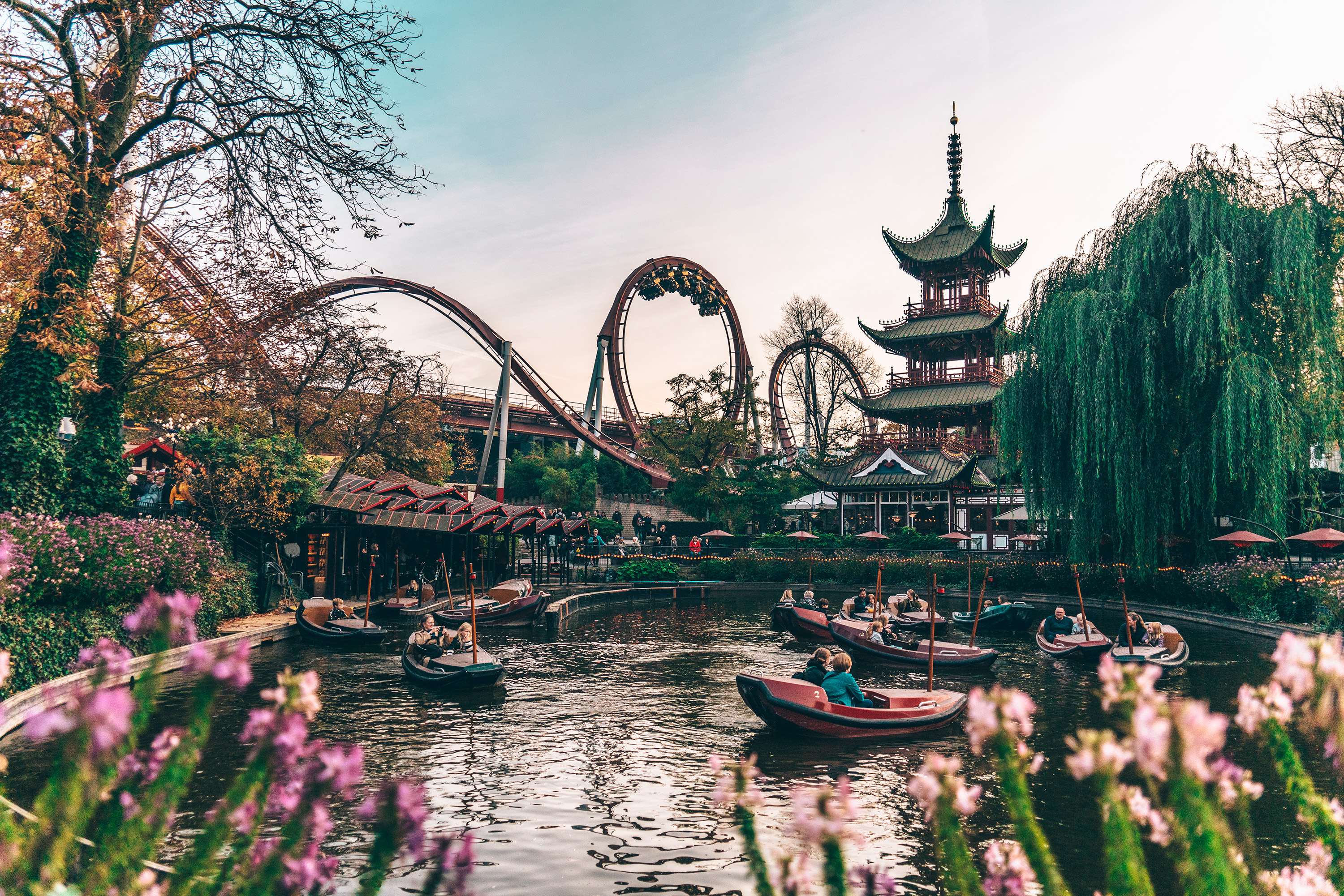
Every Friday throughout the summer, musicians take the stage at Fredagsrock (Friday Rock) in the internationally renowned Tivoli Gardens Amusement Park, the world's second-oldest amusement park. This year’s Open-Air Stage features performances by Brad Paisley (June 19), Rick Astley (July 3) and Flo Rida (Aug. 7).
Taking over various neighbourhoods, Copenhagen Distortion (June 3-7) is a citywide street festival that celebrates club culture, electronic music, street life and contemporary art. About 100,000 people attend each year.
From July 3-12, the Copenhagen Jazz Festival will take over more than 100 venues in the city. Performances will include both Danish and international artists.

BACK TO
THE TOP
Why
Pompette, Nørrebro neighbourhood
Go Boat on the canal
Nordhavn | credit: Lukas Bukoven


Frederiksberg Palace | credit: Maria Kathrine Preisler
Helsingør (left); Kronborg Castle (right) | credit: Lukas Bukoven



Dyrehavsbakken | credit: Jacob Lisbygd

The Deer Park | credit: Marvin Kuhr


Peter Lieps Hus | credit: Mark Tanggaard


credit: Lukas Bukoven

credit: Lukas Bukoven

Tårnby | credit: Daniel Rasmussen


Copenhagen Jazz Festival (left); Copenhagen Distortion (right) | credit: Daniel Rasmussen, Lukas Bukoven


Copenhagen Pride Week

Copenhagen Cooking & Food Festival


