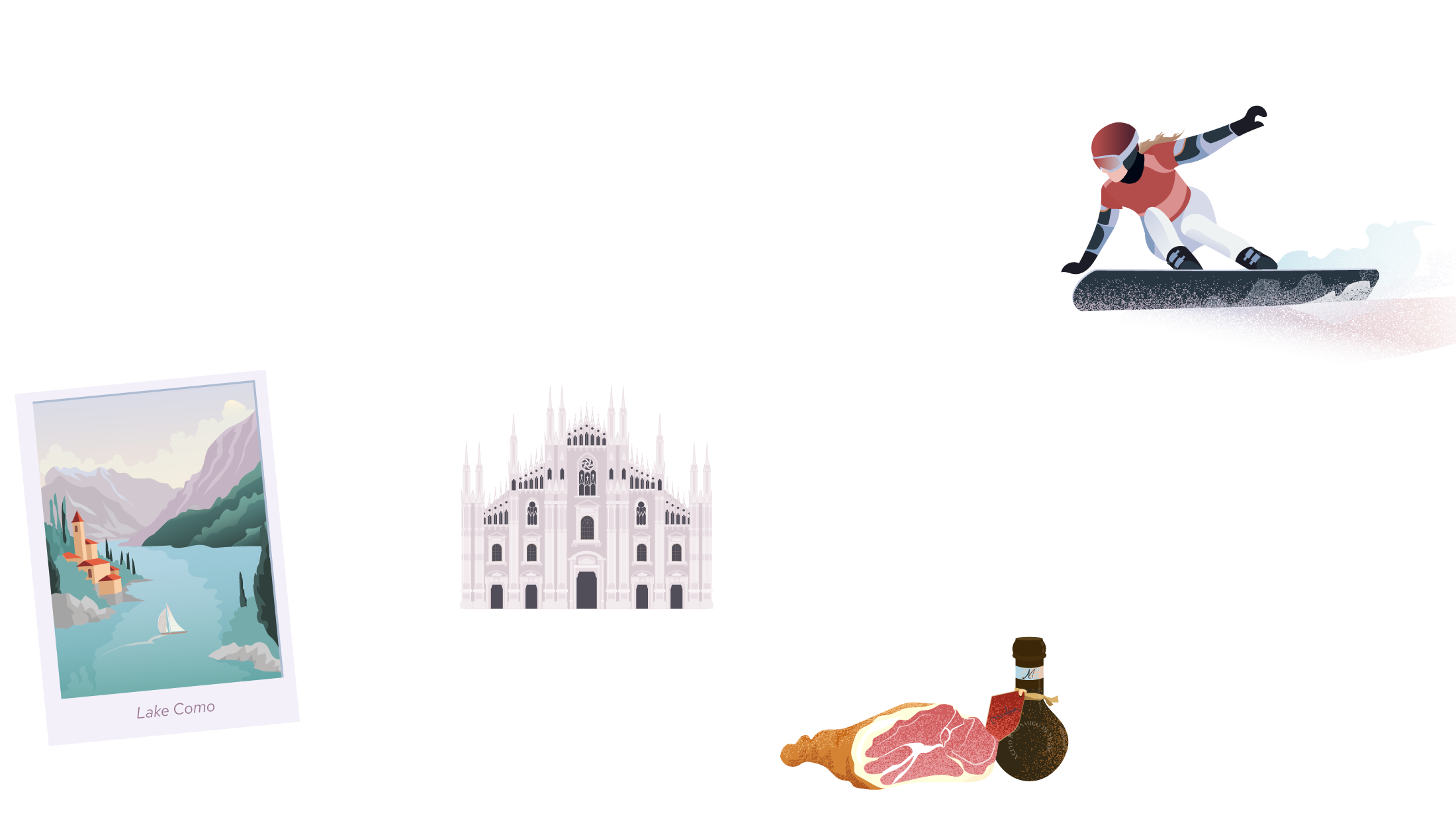
the cultural capitals | the spirit of discovery | nature's northern playground
Northern Italy
T he 2026 Winter Olympics will take visitors across Northern Italy, from figure skating in Milan to the biathlon in Anterselva. Viewers at home will see it all, too—cutaways of vaulted cathedrals and soaring ridgelines woven between footage of athletes competing for their place in history. This interplay of culture and landscape gives host cities a presence as vivid as the medalists themselves. The Games, after all, are more than just a sporting event. They’re a stage designed to showcase an entire region, its contours and character visible in every frame.
Travelers eager to experience it all may find themselves unsure of where to begin. Most visitors flock to a narrow slice of Italy—a recent study found that 75 percent of international tourists concentrate in just 4 percent of the country—leaving much of the north quietly compelling and largely spared from the usual crowds. But that doesn’t make it any less worth exploring. Even if you remove Florence and Venice from the map, the region still offers world-class art, piazzas alive with history and alpine villages tucked into valleys that feel both timeless and extraordinary.
Northern Italy exudes a precision and poise that feels distinct from its southern counterparts. Here, Italian heritage is refracted through centuries of Germanic influence, shaping cities that are at once cosmopolitan, industrious, classical and contemporary.
A saying holds that for every church in Rome, there is a bank in Milan—a telling shorthand for a culture that prizes commerce alongside artistry. The nation’s financial and fashion capital serves as both the site of the Olympic Opening Ceremony and a convenient access point for exploring the region. Begin at the Duomo, where Gothic spires, sculpted facades and 3,400 statues—more than any other building in the world—culminate in an architectural behemoth completed over six centuries.
Nearby, the Galleria Vittorio Emanuele II blends 19th-century grandeur with modern luxury, while La Scala Opera House stands as a global icon of the genre. In the hushed refectory of the Santa Maria delle Grazie convent, Leonardo da Vinci’s “The Last Supper” requires a reservation. Only 40 visitors may enter at a time, giving each the chance to linger before the fragile painting and absorb its meticulous detail.


A region ready for its moment


BACK TO
THE TOP

BACK TO
THE TOP

BACK TO
THE TOP


Galleria Vittorio Emanuel II

Cinque Terre


The cultural capitals
The spirit of discovery
Nature's northern playground
See the "Last Supper" at Santa Maria delle Grazie convent
Duomo di Milano
Monterosso al Mare

Plan your trip


Cortina
Skiing in Livigno
Winter shopping in Milan
Peace Arch, Milan
Parmigiano-Reggiano cheese (left); Food market (right)
Vineyard in Emilia-Romagna (left); Bergamo's Città Alta (right)
Palio di Ferrara
Villa del Balbianello
Wine tasting
For an intimate glimpse into Milanese high society, Villa Necchi Campiglio evokes 1930s elegance in a quiet, gardened oasis, while Foto Veneta Ottica—a decades-old eyewear emporium—houses rare vintage pieces, including some once owned by Elton John.
Contemporary design is embodied in the Bosco Verticale towers and the surrounding Porta Nuova district. For dinner, Ratanà in Isola serves risotto alla Milanese with saffron and bone marrow, considered among the city’s finest interpretations.
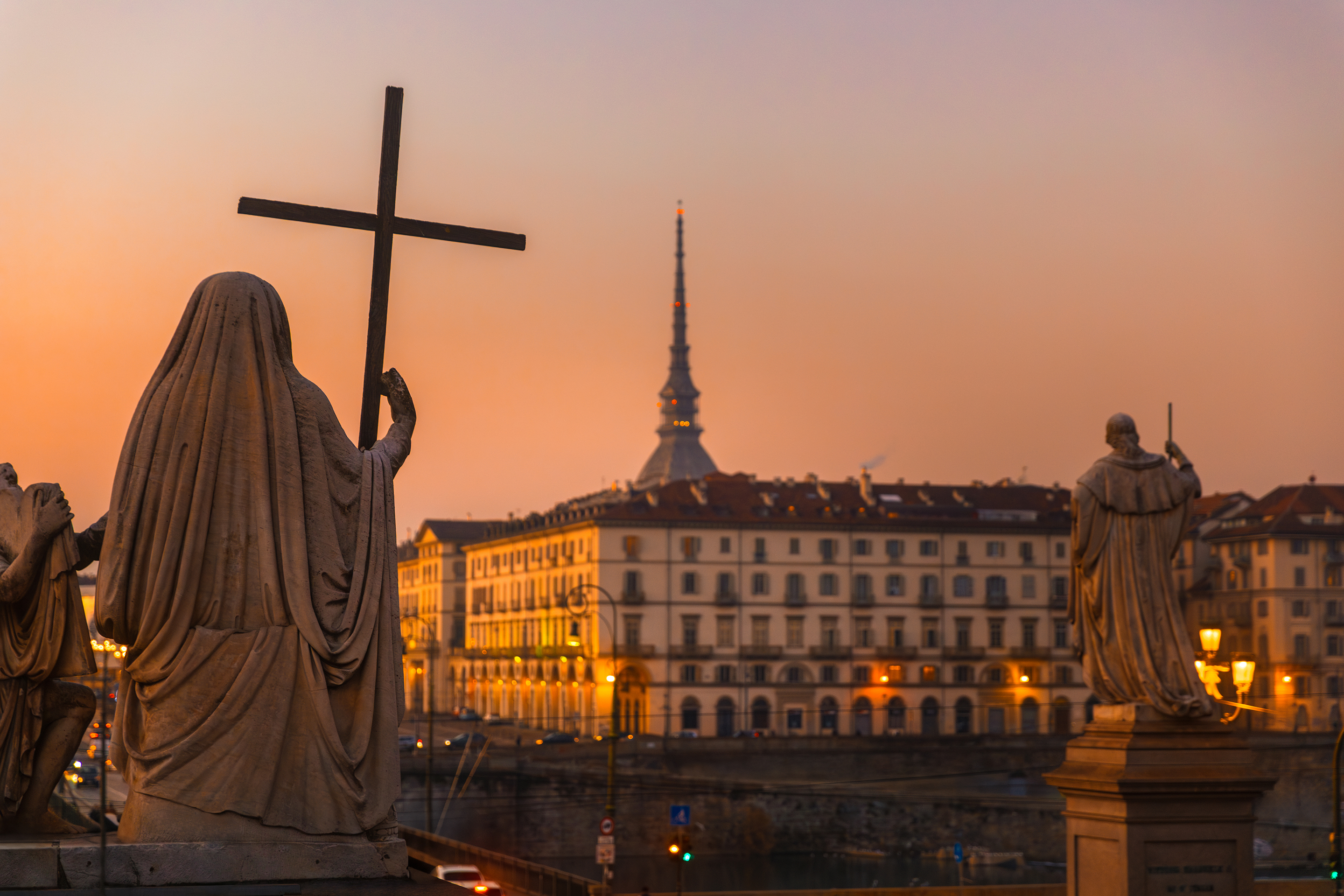
A two-hour train ride west, Turin offers a quieter, more cerebral charm. Italy’s first capital is a city of porticos and coffeehouses, where baroque grandeur meets Alpine restraint. Grab a bicerin—the city’s signature blend of espresso, chocolate and cream—at Caffè Al Bicerin, then wander through Piazza Castello toward the Mole Antonelliana, now home to the National Cinema Museum. Turin’s elegance is rooted in symmetry and ritual: grand boulevards, meticulously folded napkins and a reverence for the small details that make life feel deliberate.
Best Bet 2026
Northern Italy was chosen as a Travelzoo Best Bet for 2026. Only ten worldwide destinations were selected for this honor, based on factors like increased interest among Travelzoo members, sustainability considerations or landmark events for the new year. See the full list here.
Best Bet 2026
Best Bet 2025
Best Bet 2026
Northern Italy was chosen as a Travelzoo Best Bet for 2026. Only ten worldwide destinations were selected for this honor, based on factors like increased interest among Travelzoo members, sustainability considerations or landmark events for the new year. See the full list here.
Lake Garda
Sentiero Azzurro, Cinque Terre
View from the Church of Gran Madre di Dio, Turin
Southward, the cities of Emilia-Romagna reveal the region’s culinary soul. Bologna is a sensory education, featuring mortadella and tagliatelle al ragù at the markets of Quadrilatero and Lambrusco poured at trattorias without pretense. Parma, meanwhile, brings its own gospel: prosciutto, Parmigiano-Reggiano and a musical heritage tied to Verdi.
Just east, Verona fuses history with performance. The Verona Arena, a Roman amphitheater dating to 30 A.D. and home to the city’s annual opera festival, will also host the Closing Ceremony of the 2026 Winter Olympics, linking centuries of musical tradition with contemporary spectacle.
Beyond Northern Italy’s well-trodden cities lie towns and landscapes that reward curiosity with a quieter, more intimate experience. Cinque Terre, a 6-mile ribbon of Ligurian coastline that evokes the Amalfi Coast, is a chain of five villages where steep cliffs meet the sea and everyday life unfolds at its own rhythm. Vernazza charms with a natural harbor and crumbling castle, Manarola with cliffside vineyards and a hiker’s network of trails, and Corniglia, the hilltop village without a port, offers a cooler, less crowded vantage point. Each of the five towns is compact, walkable and connected by the Sentiero Azzurro (Blue Path), a coastal trail of terraced paths and seaside views regarded as one of Italy’s most celebrated hikes.
Bergamo, divided into the medieval Città Alta and the modern Città Bassa, reveals centuries of Venetian fortifications and elegant piazzas, while Mantua and Ferrara, Renaissance strongholds, invite slower exploration through art-filled palaces, riverfront promenades and charming local museums. Emilia-Romagna’s rolling hills, particularly the Langhe, combine gastronomy with agritourism stays, where tartufi (truffles), Barolo and Barbaresco wines anchor a rural rhythm that feels both luxurious and steeped in local heritage.
UNESCO World Heritage sites pepper the region, but it is the small museums and local festivals that bring culture to life. In Modena, a stroll past centuries-old arcades and riverstone streets leads to markets overflowing with Parmigiano-Reggiano, balsamic vinegar and cured meats. Ferrara celebrates the month-long Palio di Ferrara, a custom dating back to the 13th century, with inter-neighborhood competitions like flag throwing and horse racing. Meanwhile, small towns mark patron saints with parades, local music and food fairs, allowing visitors to witness traditions often eclipsed by larger tourist centers.
The grandeur of Northern Italy is written in stone and water, from the soaring cliffs of the Dolomites to the tranquil expanses of its alpine lakes. In South Tyrol, the Dolomites rise in pale limestone towers, their contours shifting with the light. Hikers trace ancient routes between rifugios, mountain lodges serving simple food and expansive views, or drive the Great Dolomite Road from Bolzano to Cortina d'Ampezzo, traversing high passes and wildflower meadows. Bolzano, bilingual and cosmopolitan, balances Austrian exactitude with Italian warmth, while nearby Merano continues a centuries-old tradition of spa culture and mountain wellness.
The northern lakes of Como, Garda and Maggiore offer a gentler expression of the alpine world. Lake Como’s villas and gardens have long captured the imagination, from the cinematic terraces of Villa del Balbianello to the botanical abundance of Villa Carlotta and Villa Serbelloni. Yet the lake’s quieter side tells a deeper story. The “End of the War” museum in Dongo commemorates wartime history, silk artisans maintain Como’s textile legacy and small towns such as Varenna, Torno and Nesso preserve daily life with little regard for celebrity.
To the east, Friuli-Venezia Giulia and Trentino-Alto Adige combine vineyards, forests and valleys shaped by Italian, Austrian and Slovenian influences. Spa retreats like Terme di Salsomaggiore and Terme di Tabiano coexist with alpine sports, reflecting a region where quiet tradition and vigorous activity intersect.

Lake Como
Like the Olympics themselves, a visit to Northern Italy demands a little planning. Maybe you’ll arrive in summer, when the lakes glimmer, the trails are walkable and the roads are easier to navigate. Or perhaps winter calls, with snow-dusted peaks and slopes ready for all skill levels. Either way, trains and buses can carry you across the country comfortably, while a rental car gives the freedom to wander outside the usual circuits.
Every path through the north holds its own allure. Cultural capitals like Milan and Turin pulse with art, fashion and historic architecture. Culinary hot spots such as Parma and Bologna offer bustling markets and world-renowned food traditions. And the region’s scenic splendor —from the majestic Dolomites to the glassy waters of Lake Garda and Lake Como—rewards hikers with vistas both vast and intimate.
Together, they form a Northern Italy that merits the same admiration as the country’s most visited destinations, revealing a richness that extends far beyond the familiar tourist trail.
Galleria Vittorio Emanuel II


Monument Alfiere Dell'esercito Sardo in Piazza Castello

Turin

Bicerin


Cortina

Spa in Merano

Hiking trail in the UNESCO-listed Dolomites
The Dolomites