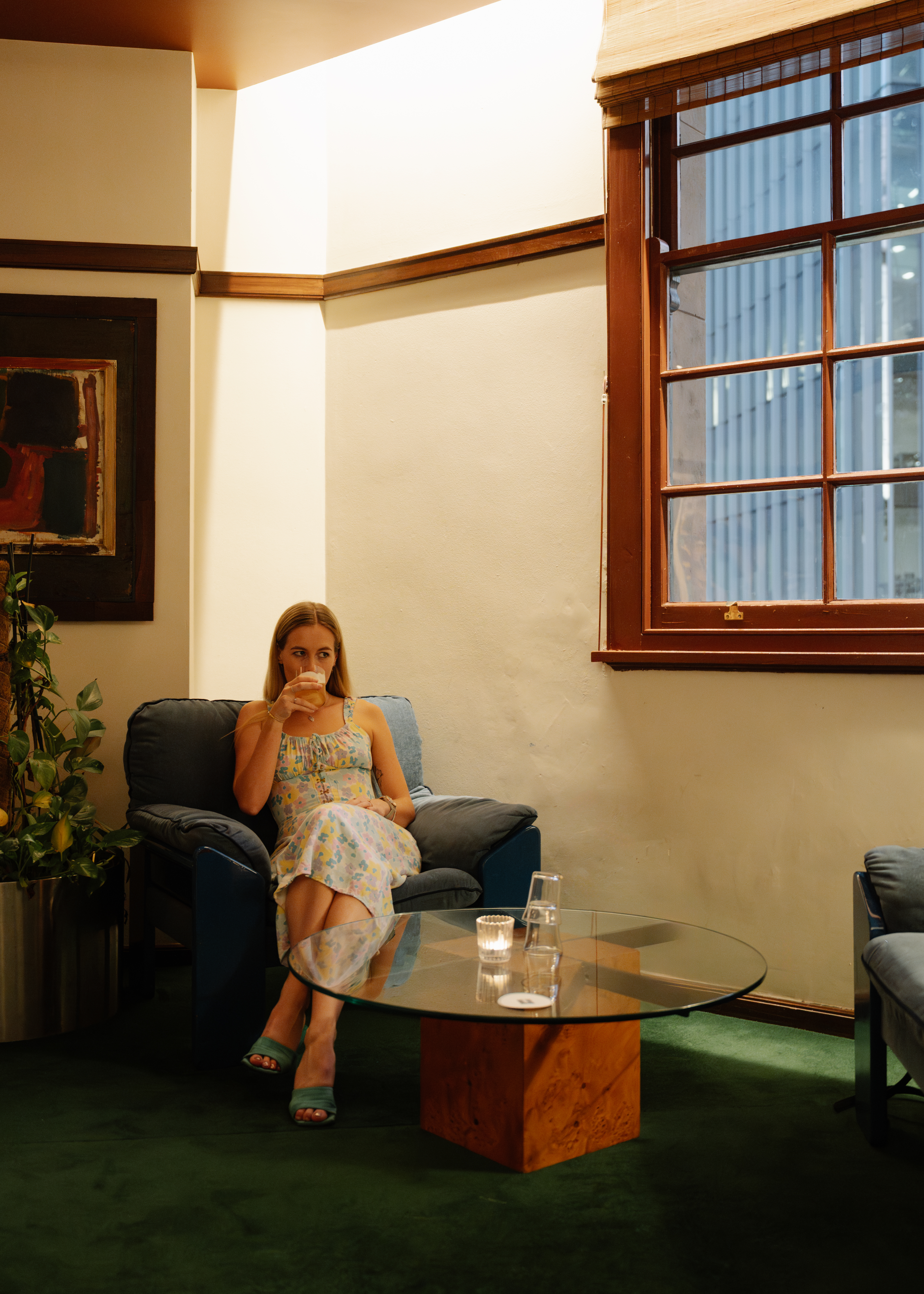
In early 2024, the Perth local was living what many would call a picture-perfect life—healthy, working a 9-5, and spending her free time exercising and hanging out with her loved ones. But just a week after her 27th birthday, Sophie was diagnosed with multiple sclerosis (MS)—a chronic, degenerative neurological disease—flipping her world upside down.
�One year on, we chatted to Sophie about resilience and hope, revealing how she regained control of her health, reshaped her mindset and found strength in MSWA, an organisation providing vital support to people living with neurological conditions in Western Australia.
Fact: MS affects more young people in Australia than any other chronic, progressive neurological disease, but it’s not something Sophie ever imagined would enter her world.
When she awoke on a Sunday morning in May 2024 with blurry vision in her right eye, she put it down to the lingering effects of a hangover. But two days later, when the blurriness remained, she booked in for a doctor's appointment.
Having had LASIK surgery, Sophie’s vision was usually 20/20, so when her eye test raised red flags, she was referred for a brain scan. Then came the call that changed everything.
Sophie O’Donoghue: Meet The 28-Year-Old Turning Her MS Diagnosis Into A Mission
FEATURE
by Morgan Reardon
1 July 2026
One of Sophie’s biggest challenges was no longer being able to donate blood and plasma, something she had been doing since she was 21.
I had just hit 85 donations when I was diagnosed. When I realised I couldn't do that anymore, it completely threw me. It’s where I got a lot of my self-worth from.
This article is sponsored by MSWA and proudly endorsed by The Urban List. To find out more about who we work with and why read our editorial policy here.
�


If you ever needed a reminder that your life can change in an instant, Sophie O’Donoghue’s story is it.
�


“I was just finishing work, when my doctor called,” Sophie recalls. “The first thing he said was, ‘Where are you?’ Then he asked if I was in a private room.” That’s when she heard the words: we’ve found lesions on your brain. “I dropped my phone. I was inconsolable. I thought I was going to die,” she says.
After a few emotional rollercoaster days that included more scans, her first ever hospital stay and a lumbar puncture, it was revealed not to be a brain tumour, but MS.
�
�
Everything changed so fast. I didn’t know anything about MS. I didn’t think it was something that affected young people.

Initially, the diagnosis sent Sophie spiralling. “I thought I would slowly lose the ability to walk or concentrate,” Sophie remembers. “But my neurologist explained that because I was diagnosed early, and could get onto medication quickly, I should live a totally normal life.
It was then that Sophie was referred to MSWA.“When I first arrived I felt like a complete impostor,” Sophie says.
"I didn’t have enough of a disability to go on the NDIS, but at the same time I felt too different to be in the ‘normal’ community, so I just felt stuck."
Determined to flip the script, Sophie partnered with MSWA to create the Lifeblood Team, encouraging others to donate on behalf of those who can't. Their goal: 100 donations by the end of the year.
Another area Sophie’s passionate about? Raising awareness and much-needed funds for early diagnosis and medications.
Just five years ago my monthly medication was not on the PBS and cost over $2000, now it’s just $30 and has shrunk my lesions in less than a year."


Perhaps the biggest change since finding out she has MS, is Sophie’s mindset. “Obviously I would rather not have MS, but in a way, it's given me a lot of freedom.”
“In your 20s you think you have infinite time, but then something like this happens and it's a reminder that you don't,” Sophie says.


But as soon as she spoke to the MSWA NeuroCare Nurses, that feeling shifted. They helped her administer her medication, and followed up weekly with phone calls. MSWA also invited Sophie to After Hours, a social program at Lawson Flats connecting working professionals living with neurological conditions, where she finally felt seen.
Sophie recalls one conversation vividly, “I used to think no one looks like me, no one is having the same experiences as me, but then I met a guy similar to my age who had been diagnosed earlier than me. I told him how I had been feeling and his eyes just lit up. He said, ‘That’s exactly how I felt.’ It was such a relief.”
As a result, she has only had one flare-up and has found herself in a healthier state than she was pre-diagnosis—she even shaved a whole minute off her 5km run time. But Sophie’s acutely aware that those born just a few decades before her, haven’t been so lucky.
“When I tell people I have MS, they look me up and down and I know what they're thinking, ‘but you're walking?’. It really pushes me to keep talking about MS. It’s a myth that it only affects old people. The average age of diagnosis is between 20 and 40.”
Life is so short. In May we thought I had a brain tumour and that I was going to die, but now we know I don’t, I'm going to go for what I want—go for the job, travel more, and do the things that might scare you.
Sophie’s not just living with MS, she’s owning it, using her voice to show that life doesn’t stop after a diagnosis. With a wedding to her partner of 10 years on the horizon, travel plans in the works, and a continued drive to advocate through her work with MSWA, Sophie’s future is full of purpose… and she's just getting started.
For those wondering how they can support people like Sophie, buying a ticket in The Lucky List is one way to make a real impact while winning some epic prizes. The Lucky List is run to benefit MSWA, so ticket purchases help fund life-changing services across WA, empowering people with neurological conditions to keep doing what they love.