200 emails, and, now, it’s time to head home. Your reward for a job well done? More blue light.
Odds are, you own a pair of blue light glasses to counteract the havoc all of that browsing and binge-watching can cause. And while those can do a lot of heavy-lifting for your energy levels and eyesight, there’s still a huge part of your body left unprotected: your skin. Turns out, blue light — about one-third of all visible light — can severely affect the collagen in your skin and potentially promote a range of concerns, from premature aging to hyperpigmentation. To save you time (and some stress), we uncovered the major ways blue light may be secretly changing your skin. Plus, a solution.
he work day is over. You’ve logged countless hours at your computer, completed your daily word puzzle on your lunch break, deleted about
T
Production Credits
By Felicia Reich
How this one wavelength is speeding up hyperpigmentation and wrinkles.
Is Blue Light Secretly Aging Your Skin?

Blue light only emanates from electronics and artificial sources like LEDs.
True
False
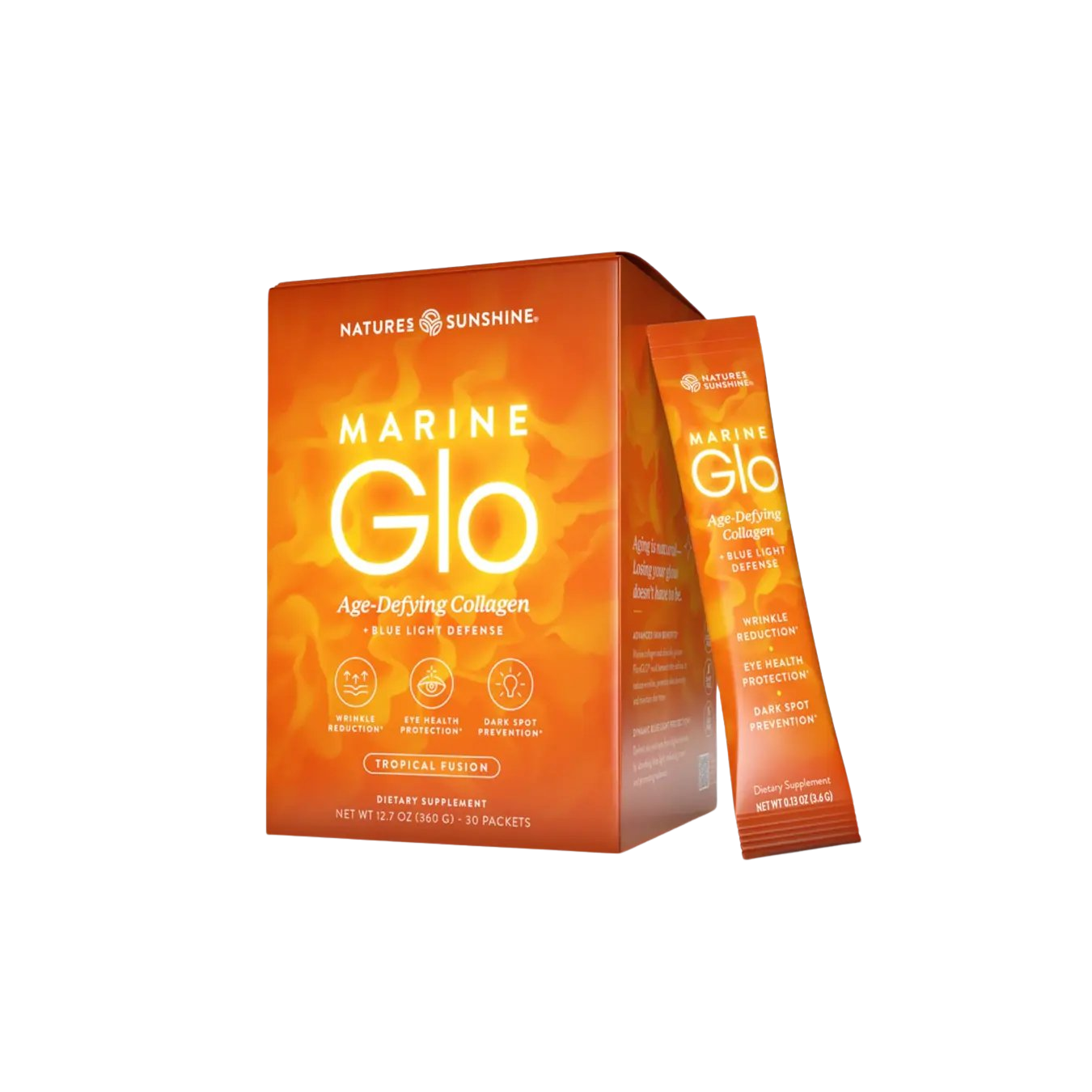
Blue light exposure can permanently damage DNA inside skin cells, meaning long-term exposure makes it harder for your skin to protect itself from free radicals and other toxins, which may lead to inflammation and early signs of aging. On a cellular level, blue light breaks down the collagen in your skin, the protein responsible for keeping your skin looking plump and elastic. When it starts to degrade, it doesn’t bode well for your body’s ability to protect that youthful glow, but staying away from blue light is nearly impossible. Luckily, there’s a new solution on the market in Nature’s Sunshine clinically-tested Marine Glo. It’s the only collagen product that offers protection for both skin and eye health, reduces wrinkles, and slows the skin’s loss of elasticity.
Premature Aging
Dry skin is strictly genetic.
Skin Barrier Damage
The more blue light that hits your skin’s outer layer, the tougher a time it has to preserve its hydration, tautness, and elasticity. External stressors, such as pollution or blue light, can make it harder for our bodies to create antioxidants, potentially resulting in oxidative stress (i.e., an overload of free radicals).
Whether done topically or with a supplement like Marine Glo, a helpful plan of action is to proactively protect — and strengthen — the skin barrier with collagen. In fact, one 2023 study found that oral collagen can have a positive impact on skin health and significantly improve skin hydration. The biotin in Marine Glo can also help your body produce important fatty acids that help bolster the skin’s moisture barrier.
Blue light prevents your body from making new collagen.
Hyperpigmentation
While going filter-free on social media is a worthy cause, without a strong filter blocking blue light from your skin, serious discoloration can occur. Healthy skin and eyes use carotenoids — powerful pigments naturally found in foods and plants — to prevent blue light from permeating. But because of how they interact with your melanin processes, as your body’s supply drops, dark, blotchy patches can appear, especially on your face. Hyperpigmentation, melasma, and dark spots are all common side effects of long-term blue light exposure.
One 2017 study found that an increased intake of antioxidant-rich pigments, such as lutein and vitamin C, can help keep pigmentation issues at bay. But antioxidants can do more than that. They can also help combat oxidative stress that may lead to premature aging. The secret ingredient in Marine Glo is the research-backed FloraGLO® Lutein, derived from marigold flowers. According to one report, it's the lutein molecule’s ability to influence the cell membrane’s functional properties and structural stability that can offer comprehensive protection against the effects of blue light. Combined with the power of vitamin C, Marine Glo is able to help boost skin elasticity and collagen production, making it the only daily collagen supplement that can offer blue light protection while addressing major skin concerns.

Correct!
The sun is the main source of blue light. So, glasses don’t always cut it — at least, not for skin. Nature's Sunshine Marine Glo is a clinically-tested daily collagen supplement that can offer blue light protection while helping boost skin hydration, smoothness, and glow.
Incorrect!
The sun is the main source of blue light. So, glasses don’t always cut it — at least, not for skin. Nature's Sunshine Marine Glo is a clinically-tested daily collagen supplement that can offer blue light protection while helping boost skin hydration, smoothness, and glow.

Correct!
Genetics can play a role, but there are other factors to consider, like exposure to blue light. This can disrupt the skin barrier, which may lead to dryness. A daily collagen supplement, like Marine Glo, can offer essential support by increasing skin hydration and strength.

Incorrect!
Genetics can play a role, but there are other factors to consider, like exposure to blue light. This can disrupt the skin barrier, which may lead to dryness. A daily collagen supplement, like Marine Glo, can offer essential support by increasing skin hydration and strength.
Incorrect!
Clocking significant screentime doesn’t just contribute to depleted collagen; it also stops your body from being able to produce more of the protein.

Correct!
Clocking significant screentime doesn’t just contribute to depleted collagen; it also stops your body from being able to produce more of the protein.


True
False
True
False

SHOP NOW
Nature's Sunshine Marine Glo