CREDITS:
Editor: Rayna Rossitto; Art Director: Becky Joy; Photo Director: Alex Friedlander
by Kayleigh Ruller
Photographs by Ryan Belk
The region in North Carolina is home to a burgeoning food scene, where cooks are rewriting notions of the past while relying on the land that surrounds them
Advertise with us
Jobs @ Vox Media
©2025 Vox Media, LLC. All Rights Reserved

This advertising content was produced in collaboration between Vox Creative and our sponsor, without involvement from Vox Media editorial staff.
Contact • Send Us a Tip • Community Guidelines • Masthead • About Eater •
Ethics Statement • Press Room • Newsletters • How to Pitch • Maps Methodology
Terms of Use • Privacy Notice • Cookie Policy • Do Not Sell or Share My Personal Info •
Licensing FAQ • Accessibility • Platform Status
PARTNER Content From

Good Hot Fish is just one star of the burgeoning restaurant scene in North Carolina’s Southern Appalachian region, cradled by blue-toned mountains and peppered with funky enclaves and homegrown towns. Chefs in this region are deliberately preserving and evolving Southern Appalachian foodways. Their cuisine is expressive, hyper-local, and at times, revolutionary. They incorporate practices like pickling, preserving, foraging, canning, and fermenting — methods that were built out of a need for self-sufficiency in the backwoods, to hold on to the ripest, purest version of produce through the next season.
Perhaps the most dominant part of the region’s culinary heritage is community reliance. “Appalachian cuisine isn't one where you can just prepare it and be like, boom, this is Appalachian cuisine,” Shanti says. “It takes a long time. It's a whole community effort.”
At Good Hot Fish, this ineffable, all-hands-on-deck approach takes the form of “family task,” Shanti explains. On a soft pad down on the floor, the staff tends to tasks together. “Everyone is doing the same thing, whether that's front of house or back of house. We're all shucking corn, putting it up, salting it,” she says. “That's a very ancient thing.”
This investment sparked the restaurant’s initial momentum, but the food catapulted it into fandom. In this cozy, cabin-like, creekside dining room, the squash, taro, and banana blossom fritters sing. The delicate trout, a North Carolina delicacy, brightened with makrut lime and rounded out with coconut cream, gets punched up with pickled mustard greens and hand-ground naam yaa curry paste. And the thick khao soi lands on nearly every table.
Her Thai food exists without compromise in large part because of the area’s nature. “It looks like my hometown,” she says. Chiang Mai in Northern


Sun filters through stained-glass windows and onto the warm wood decor, turning the noise of my nervous system down a notch. Plates arrive in waves, starting with the mushroom escabeche bruschetta and fried provolone with apple and fig mustard. Next roll in the pork meatballs atop a pillowy bed of polenta, and braised beef cheeks with dried fruit and pistachio.
There’s a delicate tension in Guzzetti’s food; just as the Italian mains could enter into
This ethos extends to the cocktail program, led by bartender Antoine Maurice Hodge, who integrates regional ingredients with restraint. The Sienna Sun, a hibiscus allspice beverage with turmeric honey and sumac, incorporates indigenous ingredients subtly.
Aside from sourcing produce from the surrounding land, community collaboration plays a large part in Appalachian cuisine. This region-wide connection was unmistakable in September 2024, when Hurricane Helene impacted the area, upending local businesses and putting the tourism economy on pause. But amidst it all, leaders in hospitality stepped forward, as they often do.
There it is in the palm of her hand — a glimmering tray of lightly fried flounder, the scored skin hiding tender, steaming fish. She sets it on the table and encourages me and my friends to dive in. I thank her eagerly, and eat it accordingly, like I’m searching for gold.
It’s magnificent. The flounder is served alongside a ramekin of macaroni and cheese, bright pickles, and doughy spheres of hushpuppies. Its ingenuity is amplified by everything else I ordered, including a savory sweet potato cabbage pancake, hypnotic salt and vinegar pork rinds, and a playful trout bologna and cheese sandwich.
Ashleigh Shanti slides out onto the front patio of her counter-service joint, Good Hot Fish in Asheville, North Carolina, with
a sense of urgency.
“Y’all didn’t order the fish plate,” she says. “You definitely need the fish plate.”

belly pulled noodles, which are rebelliously thick and chewy. Since Neng Jr’s opening in 2022, the Iocovozzis have built a mini world in this back-alley restaurant — the rhythmic dance of the open kitchen, the curated playlist, the green tiles on the walls.


He’s not alone. Chefs and restaurateurs from beyond the region are turning to Appalachia to take advantage of the natural luxuries that the area offers. And new restaurants are bubbling up in once-sleepy pockets. The NuWray Hotel, the state’s oldest operating inn in Burnsville, reopened with a revamped kitchen and a menu that harkens back to the hotel’s old recipes. There’s Nu-Brunswick stew, chicken and dumplings, and a bacon-fat smothered salad. In Watauga County, downhome Over Yonder sits in the cool, retro-ish Rhodes Motor Lodge near Appalachian State University. At this casual joint, cornmeal-battered frog legs, shrimp and grits, and peach cobbler beckon diners in the High Country.
And still, some classic restaurants keep pace with the new and flashy. At the stone-cottage restaurant tucked between Boone and Blowing Rock, Gamekeeper, wild, high-country cuisine gets a romantic, fine-dining makeover.
Even as the landscape evolves, the Appalachian backbone remains. “I go to these restaurants today and I'm like, ‘Okay, my grandma has done that,’” Shanti says. “It has just felt very confirming that the recipes of my grandma and the recipes of my great aunties deserve to be preserved.”

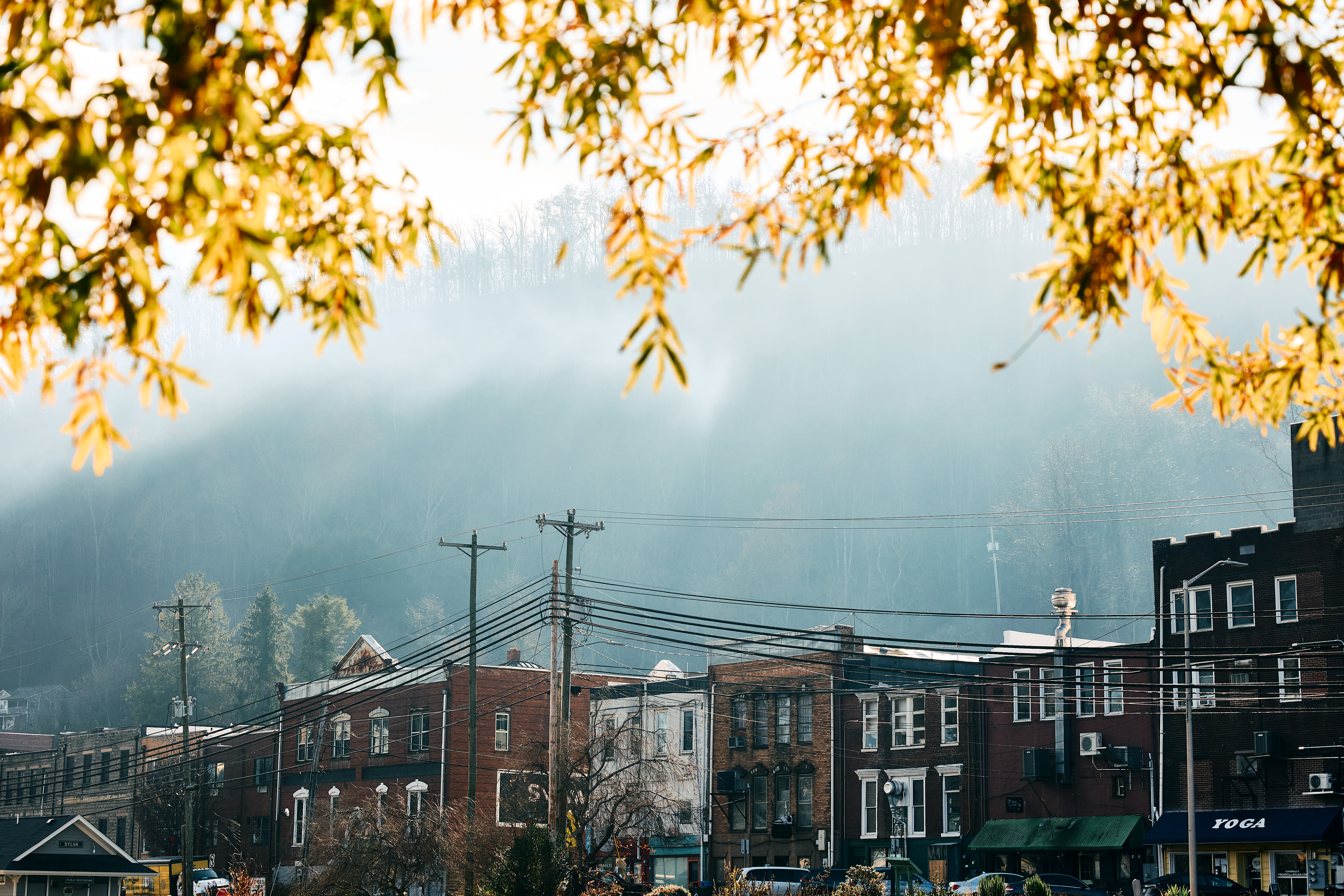
That distinctly Appalachian communal force extends well beyond Good Hot Fish, even 50 miles southwest in Sylva, North Carolina.
However, creating an unapologetically Thai restaurant in a Carolina mountain town back in 2019 proved challenging. Guests would walk in expecting familiar Thai dishes, instead of Supachana’s slow-cooked, tamarind-infused kaeng hung leh pork belly and crispy catfish with yams, draped in a mild yellow curry. “They just didn’t know my food … they didn’t want to try it,” Supachana says.
So, she leaned into her community; Supachana educated people about her culture by giving away hard-to-find Thai ingredients to locals who didn’t have access to an Asian grocer and donated more than 1,500 meals after Hurricane Helene.
At this remote resort, Aldrich is surrounded by on-site herds of cattle, towering fireplaces, taxidermied animals, and some of the most striking mountain views in the region. His beef fillet and rib-eye come from the ranch’s own cattle, and he plans to welcome pigs and chickens to the pasture soon. In the kitchen, Aldrich cooks Alpine-influenced dishes with French and Italian flair, like the diavola pizza, sturdy rigatoni, and supple meats smoked over an open firepit.
Thailand mirrors the cool waters, rainbow trout, and lush mountains of Southern Appalachia. This miraculous combination of North Carolina nature, Northern Thai cuisine, and local loyalty means “customers are driving two hours, six hours, just to eat here,” she says.
too-hearty-territory, he comes in with a bright, spiced, herbal Appalachian touch to balance each dish, be it the addition of pine vinegar, local ramps, or foraged mushrooms.
In the Appalachian Mountains,
Beyond the creative spirit of chefs like Iocovozzi, there’s another component at play in the enchanting region’s rise as a culinary hotspot: the mountain air.


Their Own Narrative
In this crafty mountain town with a population under 3,000, James Beard– nominated chef Kanlaya Supachana (also known
as chef Gun) built a loyal customer base at Dalaya Thai by talking to shoppers at the local farmers market. Just good old-fashioned “trading and bartering,” Supachana says.
“
Chefs Are Cultivating
“
Chefs in this region are deliberately preserving and evolving Southern Appalachian foodways. Their cuisine is expressive, hyper-local, and
at times, revolutionary.
Shanti first opened Good Hot Fish in January 2024, cooking the type of Black Appalachian food her grandmother did, incorporating hominy, chow chow, greasy beans, and foraged goods, dried and stretched through the seasons. It’s a destination, a show-offable place, with skateboards hanging on the walls, Cheerwine in the fridge, and photos of local Black artists collaging the space (and has the Michelin recognition and James Beard nods to prove it).
dessert would rest and the next day, “you'd have this beautiful cake,” Shanti says.
Layer by layer, chefs return to Western North Carolina, new ones add their own imprint, and elders pass down techniques. Like the mosaic of an apple stack cake, Southern Appalachia’s cooks are building something bigger, sweeter, and more beautiful than a single restaurant, a single farm, or a single dish could do alone.
Even as the landscape
evolves, the Appalachian
backbone remains.
Neng Jr’s, an 18-seat Filipino restaurant in Asheville, was at the forefront of that community activism. Chefs Silver and
and sommelier Crystal Pace. Its roots run deep, operating in the space that once was Pace’s stepmom’s restaurant.
Just down the road is Ilda, an Italian-meets-Appalachian eatery run by husband-and-wife duo chef Santiago Guzzetti
Cherry Iocovozzi, alongside Shanti from Good Hot Fish, rallied together to cook hot meals for residents affected by the storm. This type of scrappy, grassroots organization is a large reason why the restaurant scene here goes beyond dining out: It's reflective of the Appalachian culture centered around its people.
While Silver Iocovozzi pays homage to Southern foodways with seasonal stews, barbecue, Carolina Gold rice, and okra, the core of his dishes are clearly Filipino. I started with the adobo oyster crowned with a raw quail egg before moving onto the crispy-skinned duck and pork
Chef Jeb Aldrich, who leads the kitchen at Switchback, the fine-dining restaurant at Cataloochee Ranch in Maggie Valley, gives credit to the landscape for improving his quality of life as a chef. “You just look at these beautiful mountains every day… mountain fever is a real thing,” Aldrich says.


This pride isn’t taken lightly. Historically, being labeled Appalachian came with stigma and shame, Shanti says. “People don't want to be associated with being poor, barefoot back country, uneducated, all the things that the outer world associates with Southern Appalachia.” Today’s dining scene conveys a different narrative — one of enthusiasm.
Shanti tells me about an old Appalachian tradition: the apple stack cake. Families and neighbors would come together, each bringing a single cake layer, stacking them one by one with a dab of apple butter in between. Then, the
With its accessibility and bountiful land, this lush valley offers a well-deserved exhale, a pleasant relief from the demands of modern chefhood. “We have lived very high-stress lives,” he says. “That's why I love it here so much.” The Appalachian backdrop lets Aldrich move at his own pace in a serene setting — a welcome change for the chef.
Despite having to fill 250 seats every night and being a new father to twin girls, he feels a sense of calm when he steps into the mountains. “It’s this warm feeling,” he says.
The fish plate at Good Hot Fish.
Chef Kanlaya Supachana stands in her restaurant.
Dalaya Thai's bright and colorful Thai-inspired items.
Chef Santiago Guzzetti torches the lemon meringue ice cream.
A full spread at Ilda.
Chef Silver Iocovozzi stands in front of the kitchen in Neng Jr's.
The offerings at Neng Jr's.
Chef Jeb Aldrich plates the trout.
The Alpine-influenced dishes at Switchback.
The Appalachian mountains.